What Your Brain Rehearses Becomes the Pattern It Defaults To
When most people think about cognitive decline, they imagine something structural.
Plaques.
Tangles.
Damage.
A slow biological breakdown that feels inevitable.
It sounds mechanical. Fixed. Outside of our control.
But in clinical practice, especially in patients with dysautonomia, POTS, chronic stress, concussion history, or long-standing anxiety patterns, we see something different:
The brain does not just deteriorate.
It adapts.
And it adapts to what it rehearses.
Dysregulation Is a Rehearsal Pattern
Your nervous system is constantly practicing something.
It practices:
- How quickly to activate
- How long to stay activated
- How easily to shift gears
- Where to allocate attention
- What deserves priority
If the body is chronically rehearsing threat — whether physical or psychological — the brain builds efficiency around that rehearsal.
Recent research examining adults over 60 looked at something called repetitive negative thinking (RNT) — persistent, hard-to-disengage mental loops focused on worry, regret, or anticipated danger.
The finding was simple but significant:
Individuals who engaged in higher levels of repetitive negative thinking performed worse on standardized cognitive testing — including memory, executive function, visuospatial skills, and abstract reasoning.
Not just “feeling foggy.”
Measurable cognitive differences.
This Is Not About Mood. It’s About Bandwidth.
At Desert Brain and Spine, we talk about regulation constantly.
Because cognition is not just structure.
It is bandwidth allocation.
Your brain has limited processing capacity at any given moment.
If large portions of that capacity are chronically allocated to:
- Internal threat rehearsal
- What-if scenarios
- Regret loops
- Catastrophic prediction
- Scanning for symptoms
Then fewer resources remain for:
- Flexibility
- Learning
- Creativity
- Social engagement
- Adaptive problem-solving
Sympathetic dominance narrows the field.
And narrowing, over time, changes performance.
Why Dysregulation Impacts Cognition
The study itself was cross-sectional (correlation, not causation), but the physiology makes sense.
Chronic repetitive negative thinking may:
- Sustain sympathetic activation
- Elevate cortisol over time
- Reduce parasympathetic tone
- Consume working memory resources
- Impair attentional shifting
- Decrease cognitive variability
This is exactly what we see in dysregulated nervous systems.
Patients with POTS, chronic anxiety, concussion history, PTSD patterns, or long-standing stress often describe:
“I can’t shift my brain.”
“I get stuck.”
“I overthink everything.”
“I can’t turn it off.”
That’s not weakness.
That’s a nervous system that has practiced staying on.
The Vulnerable Window
Interestingly, the association between repetitive negative thinking and cognitive decline was strongest between ages 60–79.
That window matters.
Because cognition at that stage is often still largely intact — but vulnerable.
Which means:
Intervention before structural decline may matter.
And intervention does not always begin with medication.
It begins with regulation.
Neuroplasticity Does Not Judge — It Reinforces
The brain strengthens what it repeats.
Neuroplasticity is neutral.
If you rehearse threat, those circuits strengthen.
If you rehearse flexibility, those circuits strengthen.
If you rehearse curiosity and engagement, those networks strengthen.
The question is not:
“Are you having negative thoughts?”
The question is:
“What is your nervous system practicing most?”
Rumination narrows.
Conversation expands.
Movement expands.
Novelty expands.
Breath regulation expands.
Adaptive challenge expands.
This Does NOT Mean
Let’s be clear.
This does not mean:
- Negative thoughts cause dementia.
- Rumination guarantees decline.
- Cognitive changes are a moral failure.
But it does suggest something important:
Mental rehearsal may influence cognitive resilience.
And rehearsal is modifiable.
The Desert Brain and Spine Perspective
When we treat dysautonomia, POTS, concussion recovery, or chronic sympathetic dominance, we are not just treating symptoms.
We are restoring:
- Autonomic balance
- Cognitive flexibility
- Bandwidth availability
- Emotional adaptability
This is why treatment is not just passive therapies.
It includes:
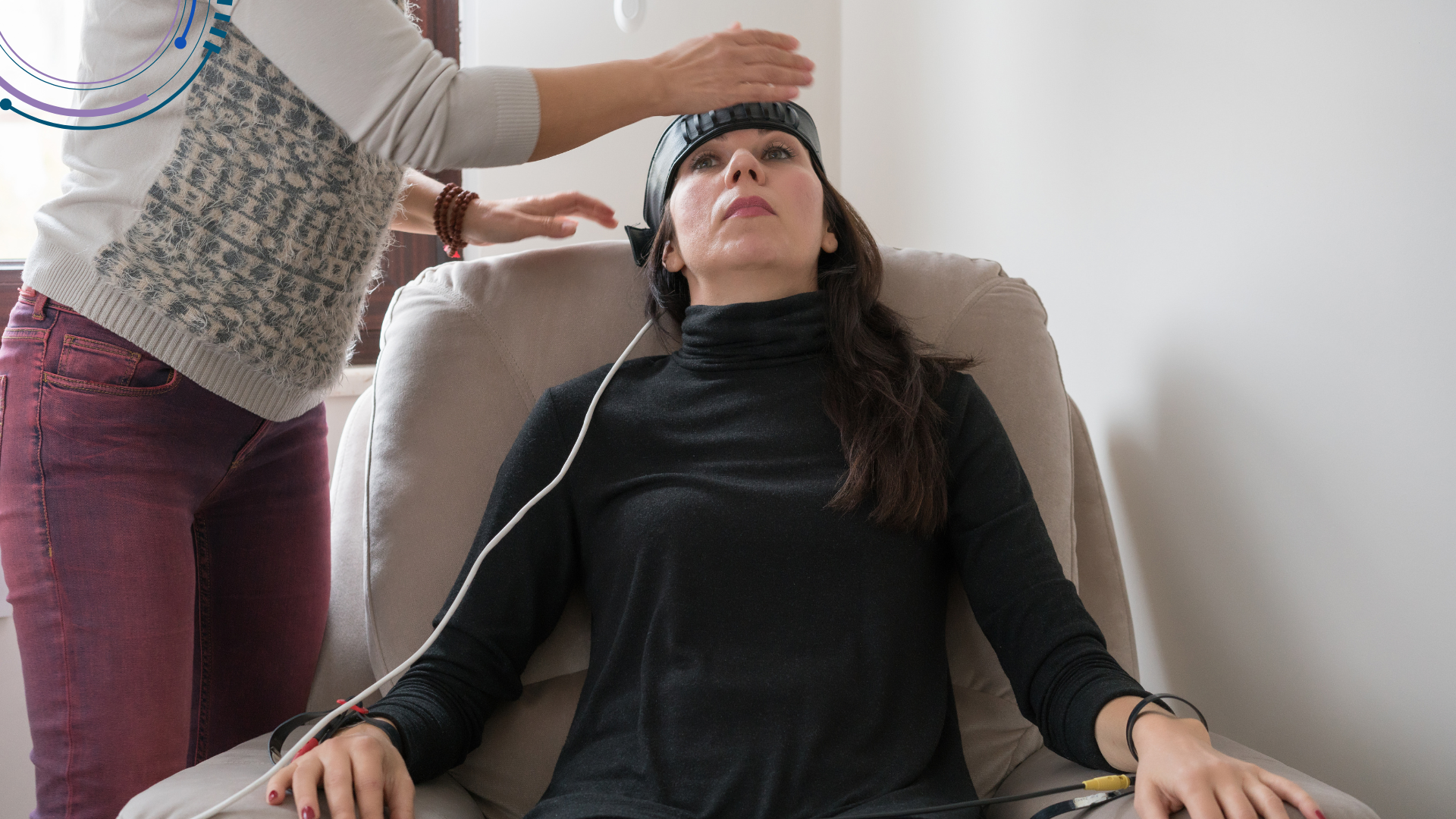
- Neurological stimulation
- Autonomic retraining
- Cognitive reframing
- Behavioral pattern shifts
- Intentional exposure to adaptive stress
- Teaching patients how to interrupt the loop
Because if the loop continues, the brain will continue to build around it.
The Quiet Question
When your external world becomes still…
What does your brain default to?
Threat?
Scanning?
Symptom monitoring?
Regret?
Prediction?
Or curiosity?
Planning?
Connection?
Possibility?
Your brain builds what it practices.
Regulation widens the field.
And widening the field preserves function.
Cognition is not only memory.
It is flexibility.
And flexibility begins with learning how to shift.
If you are living in a chronically activated nervous system, the goal is not to “think positive.”
The goal is to regulate physiology so that adaptive thinking becomes possible again.
Because when the body is safe, the brain can shift.
And when the brain can shift, it can build something stronger.